June 23rd, 12 pm - 2 pm CT
Overview
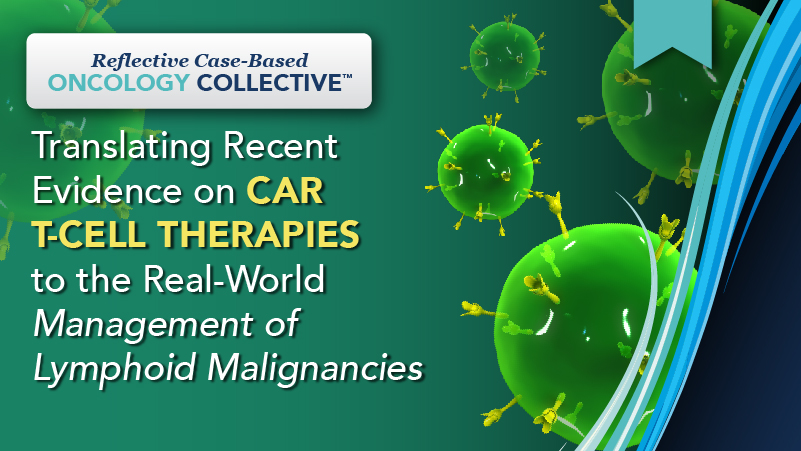
Given the recent approvals of CAR T-cell therapies for the treatment of lymphoid malignancies, educational programs that provide expert guidance regarding the most appropriate and efficacious incorporation of these agents into clinical management will help improve treatment outcome of patients. Managing toxicities in the community or in ‘real-world’ practice requires clinicians to adhere to evidence-based recommendations in this regard and also navigate challenges observed in clinical practice outside of a controlled trial. Thus, there is a need for educational programs to allow clinicians to reflect on how they currently refer and manage patients being treated with CAR T cell therapy, but also provide them solutions so that they can provide optimized treatment strategies in their practice settings.
The open exchange of ideas and clinical practices is characteristic of the Reflective Case-Based Oncology Collective™ format, which provides the ideal educational intervention to meet this educational need. Each session in this series of virtual classroom events will be led by 2 expert faculty, and will include a small group of your peers, limited to groups of 12. As a learner, you’ll have the opportunity to submit deidentified patient cases from your own practice for discussion by the group to collectively consider the ramifications of new treatment approaches. The experts will review management decisions while considering recent clinical trial and real-world data relevant to the case, and you will have an opportunity to have your questions answered.
Benefits of Attending
- Meet with hematology expert faculty and peers to review cases
- Review eligibility criteria for CAR T-cell therapy in patients with lymphoid malignancies
- Evaluate pivotal clinical trial data and real-world data on the use of CAR T-cell therapy in patients with lymphoid malignancies
Target Audience
The live activity series is directed toward medical oncologists, hematologists, and other oncology health care professionals interested in the latest advances in the use of CAR T-cell therapy for patients with lymphoid malignancies.
Fellows, researchers, nurses, nurse practitioners, physician assistants, and other health care professionals interested in the treatment of patients with lymphoid malignancies are also invited to attend.
Learning Objectives
Upon completion of this activity, participants will be able to:
- Determine the eligibility criteria for CAR T-cell therapy in patients with lymphoid malignancies and best practices for referral and follow-up
- Evaluate results from pivotal trials evaluating current and emerging CAR T-cell therapies in patients with lymphoid malignancies
- Integrate proactive, supportive measures to identify and mitigate toxicities associated with CAR T-cell therapies
- Demonstrate the incorporation of clinical trial evidence and expert experience to manage patients who receive CAR T-cell therapies for their lymphoid malignancies
5 minutes |
Welcome and Introductions |
40 minutes |
Incorporating CAR T-Cell Therapy in Lymphoid Malignancies: Approved Agents, Clinical Updates, and Future Directions |
70 minutes |
Reflective Case-based Reviews and Discussion |
5 minutes |
Key Takeaways and Adjournment |

Matthew Lunning, DO, FACP
Assistant Vice Chair of Research Department of Medicine
Assistant Vice Chancellor of Clinical Research
Associate Professor, Internal Medicine
Division of Hematology & Oncology
University of Nebraska Medical Center
Omaha, NE
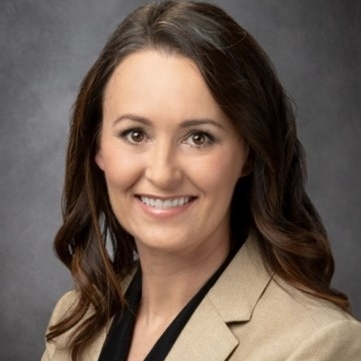
Loretta J. Nastoupil, MD
Associate Professor
Deputy Chair
Section Chief, Indolent Lymphoma, New Drug Development Team
Department Lymphoma/Myeloma
The University of Texas MD Anderson Cancer Center
Houston, TX
The staff of Physicians’ Education Resource®, LLC, have no relevant financial relationships with ineligible companies.
PER® mitigated all COI for faculty, staff, and planners prior to the start of this activity by using a multistep process.