
Release Date: March 31, 2025
Expiration Date: March 31, 2026
Activity Overview
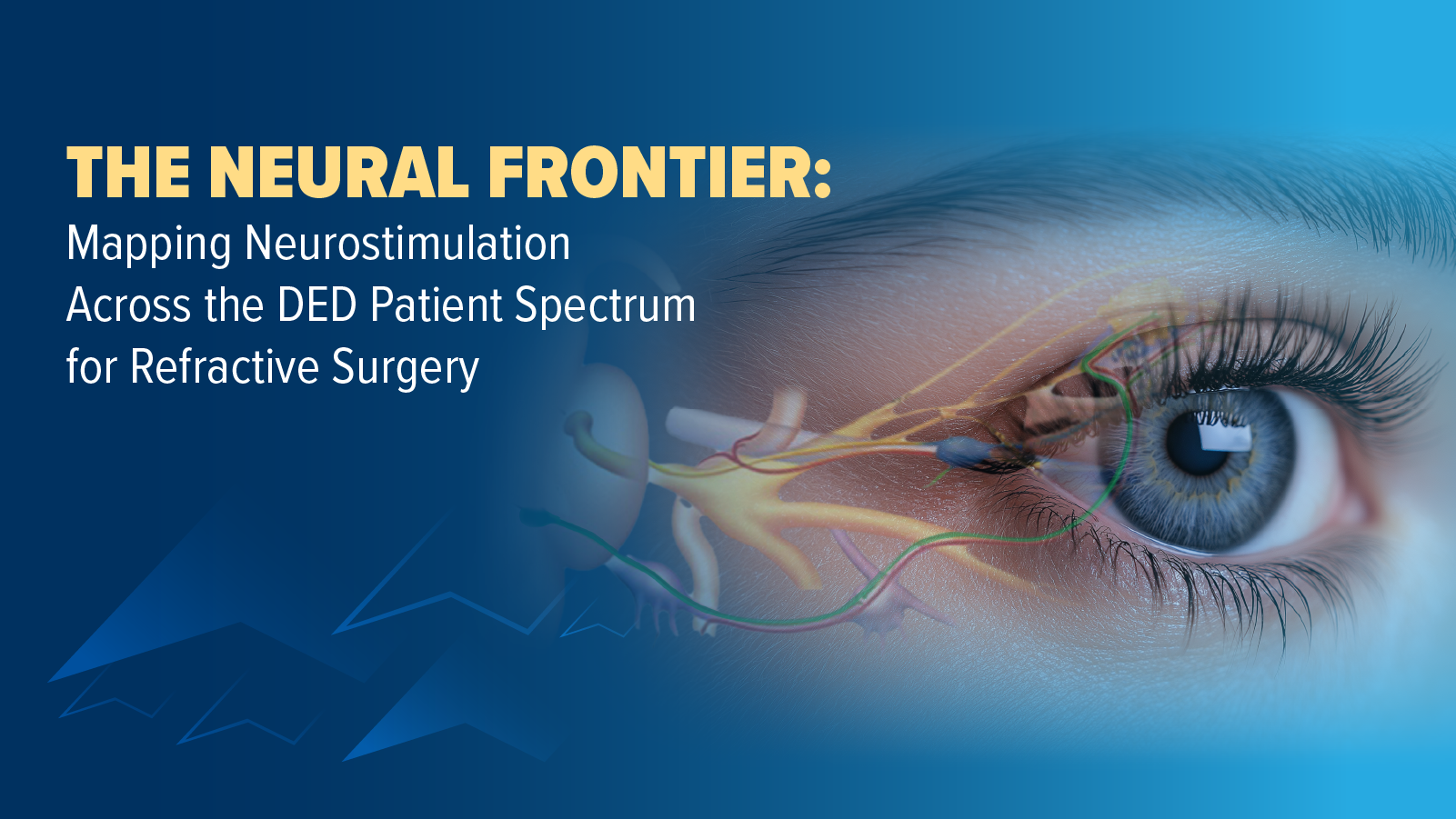
The lacrimal functional unit, which includes the lacrimal glands and meibomian glands, can be stimulated by efferent trigeminal parasympathetic nerves to trigger production of the tear film. This approach can be used to manage dry eye disease (DED) in patients undergoing corneal refractive surgery. In this program, expert faculty explore opportunities to use pharmacologic and mechanical neurostimulation to treat perioperative patients with DED.
This educational activity is an archive of the live virtual symposium held on February 16, 2025.
Target Audience
This educational activity is directed toward optometrists, ophthalmologists, and other eye care professionals.
Learning Objectives
Upon successful completion of this activity, you should be better prepared to:
- Summarize the use of neurostimulation versus neuromodulation to enhance or suppress activity of the nervous system for the treatment of disease
- Integrate preoperative screening for dry eye disease to prepare patients for corneal refractive surgery
- Evaluate the latest data on the perioperative use of neuromodulation to manage DED in patients undergoing corneal refractive surgery

Zeba A. Syed, MD
Associate Professor of Ophthalmology
Cornea Fellowship Director
Willis Eye Hospital
Philadelphia, PA
Disclosure: Grant/Research Support: Dompe; Consultant: BioTissue, Bruder, Glaukos, Recordati Rare Diseases; Speakers Bureau: BioTissue, Recordati Rare Diseases, Tarsus; Other: BioLattice.
Faculty, Staff, and Planners’ Disclosures
The staff of Physicians’ Education Resource®, LLC (PER®) have no relevant financial relationships with ineligible companies.
PER mitigated all COI for faculty, staff, and planners prior to the start of this activity by using a multistep process.
Off-Label Disclosure and Disclaimer
This activity may or may not discuss investigational, unapproved, or off-label use of drugs. Learners are advised to consult prescribing information for any products discussed. The information provided in this accredited activity is for continuing education purposes only and is not meant to substitute for the independent clinical judgment of a health care professional relative to diagnostic, treatment, or management options for a specific patient’s medical condition. The opinions expressed in the content are solely those of the individual faculty members and do not reflect those of PER or any company that provided commercial support for this activity.
GET STARTED WITH THIS PROGRAM:
Register now to gain access to this program.
Create AccountAlready Registered? Login Here