
Release Date: February 26, 2025
Expiration Date: February 26, 2026
Activity Overview
Lambert-Eaton myasthenic syndrome (LEMS) is a rare autoimmune disorder often presenting with symptoms such as proximal muscle weakness, autonomic disturbances, and areflexia. LEMS arises from defective acetylcholine release at the neuromuscular junction, which can be the result of autoantibodies against the voltage-gated calcium channels. Of note, approximately half of LEMS cases are associated with malignancy, particularly small cell lung cancer (SCLC), and may occur early in the course of disease, making proper diagnosis important for patient quality of life and survival. Agents such as aminopyridines, steroids, and intravenous immunoglobulin are key therapeutic interventions used to manage LEMS.
This satellite provides learners with key details on the relationship between LEMS and SCLC, with case-based discussions on optimal diagnostic strategies and multidisciplinary management. The case-based format allows faculty to share practice patterns and perspectives along with key clinical data to support their decision-making process.
This educational activity is an archive of the live symposium held on January 25, 2025 at the 3rd Annual Hawaii Lung Conference.
Target Audience
This educational activity is directed toward medical oncologists and practitioners of oncology subspecialties, along with surgeons, radiologists, neurologists, nurses, and pharmacists with an interest in lung cancers. Other health care professionals interested in the treatment of these malignancies are also invited to participate.
Learning Objectives
Upon successful completion of this activity, you should be better prepared to:
- Identify clinical presentations of Lambert-Eaton myasthenic syndrome (LEMS) in SCLC patients.
- Apply diagnostic protocols for accurate and timely detection of LEMS in SCLC.
- Formulate individualized treatment plans that address both oncologic and neurologic needs in SCLC patients with cancer-associated LEMS.
- Evaluate and manage treatment-related toxicities and complications associated with LEMS and SCLC therapies.

Anne Chiang, MD, PhD
Associate Professor of Medicine (Medical Oncology)
Associate Cancer Center Director, Clinical Initiatives
Yale School of Medicine
New Haven, CT
Disclosures: Grant/Research Support: AbbVie, Amgen, AstraZeneca, Genentech, Zai Lab Limited; Consultant: Jazz; Advisory Board: Amgen; AstraZeneca PLC; Daiichi Sankyo; Fosun International; Genentech, a member of the Roche Group; Janssen Pharmaceuticals; Zai Lab Limited.
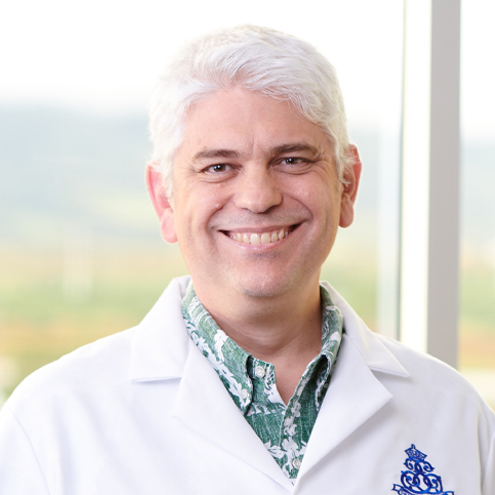
J. Douglas Miles, MD, PhD, FAAN
Neurologist
The Queen’s Health Systems
Honolulu, HI
Disclosures: Consultant or Speaker: Alexion, Argenx, UCB.

Suma Satti, MD
Medical Oncologist
Ochsner Health
New Orleans, LA
Disclosures: Speakers’ Bureau: AstraZeneca PLC, Bristol Myers Squibb, Eisai, Janssen, Merck & Co., Novocure.
Faculty, Staff, and Planners’ Disclosures
The staff of Physicians’ Education Resource®, LLC have no relevant financial relationships with ineligible companies.
PER® mitigated all COI for faculty, staff, and planners prior to the start of this activity by using a multistep process.
Off-Label Disclosure and Disclaimer
This activity may or may not discuss investigational, unapproved, or off-label use of drugs. Learners are advised to consult prescribing information for any products discussed. The information provided in this accredited activity is for continuing education purposes only and is not meant to substitute for the independent clinical judgment of a health care professional relative to diagnostic, treatment, or management options for a specific patient’s medical condition. The opinions expressed in the content are solely those of the individual faculty members and do not reflect those of PER® or any company that provided commercial support for this activity.