Overview:
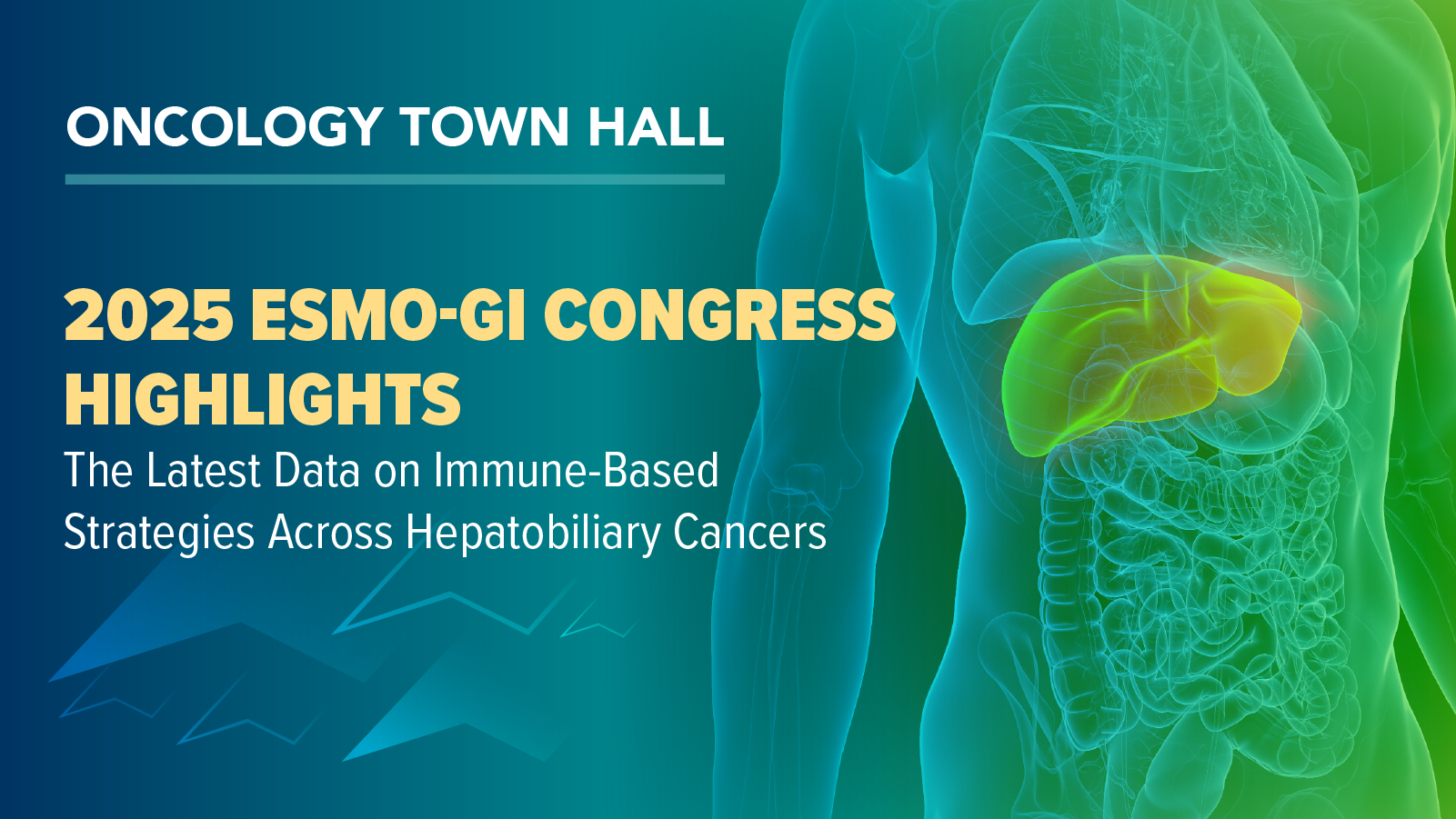
Targeted and immunologic approaches have fundamentally changed the treatment landscape for patients with advanced hepatobiliary cancers. As new treatment approaches are introduced as options in this setting, keeping pace with updates to pivotal trials is of critical importance. In this program, expert faculty in the management of hepatocellular and biliary tract cancers describe key recent clinical trial findings relating to delivery of therapy, coordination of care, and optimal patient selection along the treatment continuum.
Learning Objectives:
Upon completion of this activity, participants will be able to:
- Evaluate immune-based treatment strategies for advanced hepatobiliary cancers and their applicability to diverse patient populations, including those with hepatic dysfunction or poor performance status.
- Apply recent evidence to inform treatment selection, sequencing, and delivery of immunotherapy in hepatocellular and biliary tract cancers across frontline and emerging therapeutic settings.
- Evaluate strategies to improve coordination and delivery of care among patients with hepatobiliary cancers

Ghassan Abou-Alfa, MD, MBA
Professor of Medicine
Weill Cornell Medical College at Cornell University
Attending Physician
Memorial Sloan Kettering Cancer Center
New York, NY

Arndt Vogel, MD, PhD
Professor of Medicine, University of Toronto
Longo Family Chair in Liver Cancer Research
Clinician Scientist
Division of Gastroenterology and Hepatology, Toronto General Hospital
Medical Oncology, Princess Margaret Cancer Centre
Toronto General Hospital Research Institute
Schwartz Reisman Liver Research Centre
Institute for Medical Science
Toronto, Canada

Laura Goff, MD, MSCI, MMHC, FASCO
Professor of Medicine
Division of Hematology-Oncology
Vanderbilt University Medical Center
Nashville, TN
Physicians’ Education Resource®, LLC, is accredited by the Accreditation Council for Continuing Medical Education (ACCME) to provide continuing medical education for physicians.
Physicians’ Education Resource®, LLC, designates this live activity for a maximum of 1.5 AMA PRA Category 1 Credits™. Physicians should claim only the credit commensurate with the extent of their participation in the activity.
This activity is supported by an educational grant from AstraZeneca Pharmaceuticals.
PER is proud to partner with the Cholangiocarcinoma Foundation (CCF).