
Activity Overview
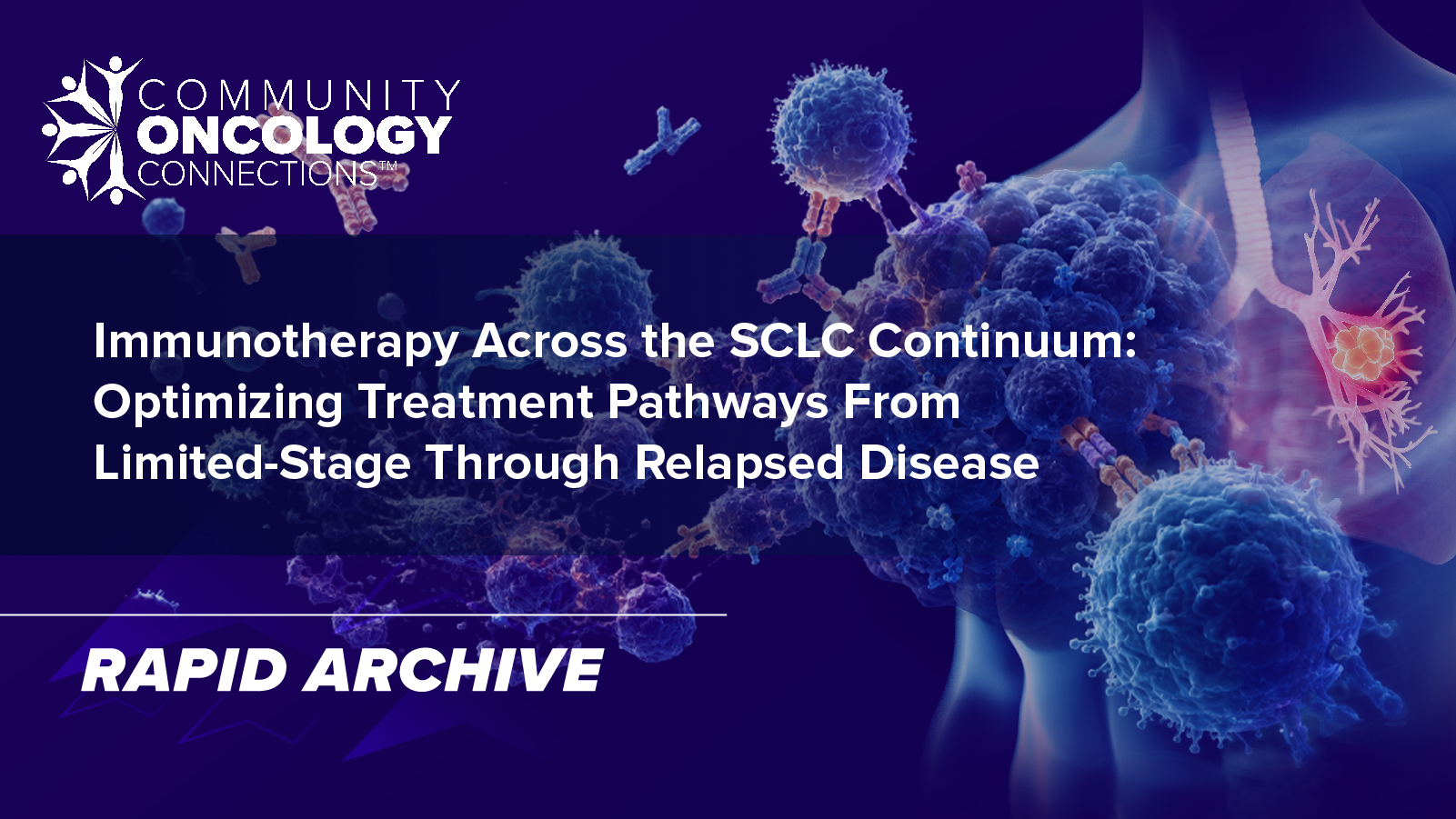
Immunotherapy is reshaping the treatment landscape across the entire small cell lung cancer (SCLC) continuum, from limited-stage through relapsed disease. Three FDA approvals in the past 15 months—durvalumab consolidation after concurrent chemoradiotherapy in limited-stage SCLC (LS-SCLC), lurbinectedin plus atezolizumab as first-line maintenance in extensive-stage SCLC (ES-SCLC), and tarlatamab for relapsed disease—have introduced practice-changing options after decades of limited progress. As these therapies enter routine practice, it is vital for clinicians to stay current on the evolving clinical efficacy data, understand the distinctions between available regimens, and recognize the unique safety profiles and toxicity management strategies—including immune-mediated adverse events, cytokine release syndrome (CRS), and immune effector cell–associated neurotoxicity syndrome (ICANS)—associated with each approach.
This program pairs an academic SCLC expert with a community oncologist to discuss the latest advances and enable the integration of immunotherapy across the SCLC continuum into community practice. Through interactive, case-based discussions between academic and community oncology colleagues, participants will gain practical insights and strategies to identify appropriate candidates for consolidation immunotherapy in limited-stage disease, navigate frontline chemoimmunotherapy backbone and maintenance decisions in extensive-stage disease, develop evidence-based sequencing approaches for relapsed SCLC, and proactively recognize and manage treatment-related adverse events to optimize patient outcomes.
This educational activity is an archive of the live presentation held on September 22, 2026.
Target Audience
This educational program is primarily directed toward community-based medical oncologists, radiation oncologists, nurses, nurse practitioners, advanced practice providers, and other health care professionals involved in the treatment of patients with small cell lung cancer.
Learning Objectives
Upon successful completion of this activity, you should be better prepared to:
- Integrate consolidation immunotherapy into the management of patients with LS-SCLC who have not progressed after concurrent chemoradiotherapy
- Evaluate the clinical implications of frontline immunotherapy-chemotherapy backbone selection in ES-SCLC
- Develop an evidence-based sequencing strategy for relapsed SCLC based on prior treatment history and disease characteristics

Neel Belani, MD
Thoracic Lead, Astera Cancer Care
Medical Oncology, Hematology
Associate Director of Clinical Research
START Center for Cancer Research - New Jersey
East Brunswick, NJ
Disclosures: Advisor, Consultant, Speaker, Fee for Service Recipient: AstraZeneca, Jazz

Anne Chiang, MD, PhD
Associate Professor, Division of Thoracic Medical Oncology
Yale School of Medicine
Associate Cancer Center Director, Clinical Initiatives
Interim Section Chief, Medical Oncology and Hematology
Deputy Director, Clinical Affairs
Yale Cancer Center
New Haven, CT
Disclosures: Advisor, Consultant, Speaker, Fee for Service Recipient: AbbVie, Amgen, AstraZeneca, Boehringer Ingelheim, Daiichi Sankyo, Fosun, Genentech, Janssen, Jazz, Merck, Zai Lab; Grant/Research Funding (to institution): AbbVie, Amgen, AstraZeneca, Bristol Myers Squibb, Genentech, Oryzon, Zai Lab
The staff of Physicians’ Education Resource®, LLC have no relevant financial relationships with ineligible companies.
PER® mitigated all conflicts of interest for faculty, staff, and planners prior to the start of this activity by using a multistep process.
Off-Label Disclosure and Disclaimer
This accredited continuing education activity was planned in accordance with the ACCME Standards for Integrity and Independence to ensure balance, objectivity, independence, and scientific rigor. Faculty were instructed to use generic names when possible and to base recommendations on the best available evidence. Proprietary product names may be referenced in clinical discussion for educational purposes only and do not imply endorsement.
This activity may include discussion of investigational, unapproved, or off‑label uses of drugs or devices. Learners are advised to consult prescribing information for products discussed. Content is provided for educational purposes only and is not a substitute for the independent clinical judgment of a health care professional. Learners are encouraged to critically evaluate the information presented and apply their own clinical judgment.
The views expressed are those of the individual faculty members and do not necessarily reflect the views of the accredited provider or any entity providing commercial support.
This activity may have used AI-assisted tools to support educational development. All content was reviewed and approved by qualified faculty or planners. The accredited provider retains full responsibility for accuracy, balance, and independence.
GET STARTED WITH THIS PROGRAM:
Register now to gain access to this program.
Create AccountAlready Registered? Login Here