
Activity Overview
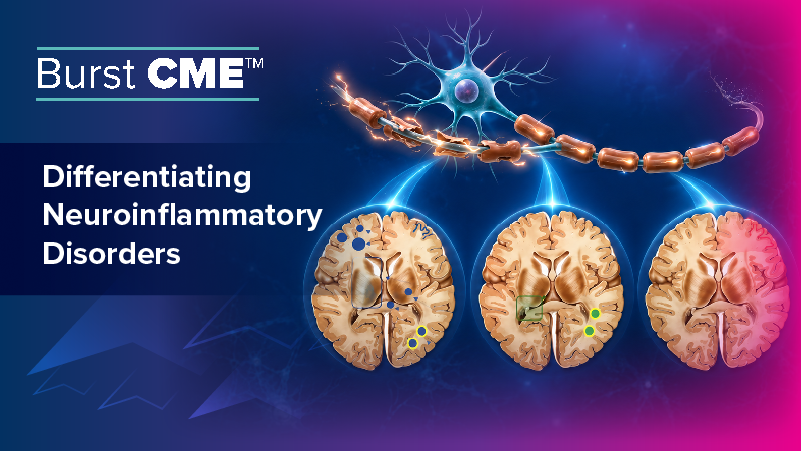
This Burst CME™ is a video-based program in which 2 faculty experts discuss how to differentiate myelin oligodendrocyte glycoprotein antibody-associated disease (MOGAD) from multiple sclerosis (MS) and aquaporin-4 antibody-positive neuromyelitis optica spectrum disorder (AQP4+ NMOSD). The sections will focus on key differences in the pathophysiology, clinical presentation, and radiological features of MOGAD, MS, AQP4+ NMOSD, and on how these distinctions support accurate diagnosis.
Target Audience
This activity is intended for neurologists, neuroimmunologists, nurse practitioners, physician assistants, nurses, and other health care professionals involved in the diagnosis and management of central nervous system demyelinating disorders.
Learning Objectives
Upon successful completion of this activity, you should be better prepared to:
- Identify differences between pathophysiological processes underlying MOGAD and other similar disorders
- Review differences in clinical presentation between NMOSD, MS, and MOGAD
- Describe radiological differences between NMOSD, MS, and MOGAD

Michael Levy, MD, PhD
Associate Professor of Neurology
Harvard Medical School
Cambridge, MA
Disclosures: Advisor/Consultant: Roche, UCB; Grant/Research Funding: Merck, Roche, UCB; Royalties/Patent Benefits: UpToDate, Merck (patent for Dach-1 IgG as a paraneoplastic biomarker)

Eoin Flanagan
Professor of Neurology/Consultant Neurologist
Mayo Clinic
Rochester, MN
Disclosures: Advisor/Consultant: Roche, UCB; Grant/Research Funding: Merck, Roche, UCB; Royalties/Patent Benefits: UpToDate, Merck (patent for Dach-1 IgG as a paraneoplastic biomarker)
The staff of Physicians’ Education Resource®, LLC, have no relevant financial relationships with ineligible companies.
PER® mitigated all conflicts of interest for faculty, staff, and planners prior to the start of this activity by using a multistep process.
Off-Label Disclosure and Disclaimer
This accredited continuing education activity was planned in accordance with the ACCME Standards for Integrity and Independence to ensure balance, objectivity, independence, and scientific rigor. Faculty were instructed to use generic names when possible and to base recommendations on the best available evidence. Proprietary product names may be referenced in clinical discussion for educational purposes only and do not imply endorsement.
This activity may include discussion of investigational, unapproved, or off‑label uses of drugs or devices. Learners are advised to consult prescribing information for products discussed. Content is provided for educational purposes only and is not a substitute for the independent clinical judgment of a health care professional. Learners are encouraged to critically evaluate the information presented and apply their own clinical judgment.
The views expressed are those of the individual faculty members and do not necessarily reflect the views of the accredited provider or any entity providing commercial support.
This activity may have used AI-assisted tools to support educational development. All content was reviewed and approved by qualified faculty or planners. The accredited provider retains full responsibility for accuracy, balance, and independence.
GET STARTED WITH THIS PROGRAM:
Register now to gain access to this program.
Create AccountAlready Registered? Login Here